The Data Gap Between Checkups: What Your Body Signals Early
RIThe Recovery IndexPreventive HealthSep 2026
Preventive Health · Research Desk
The Data Gap Between Checkups: What Your Body Signals Long Before You Feel It
Most of what your body is already telling you never reaches conscious awareness. It has to be measured — and most of us only measure once a year.
✎ Research Desk⏱ 4 min read↻ Updated September 2026
Key takeaways
1 Meaningful physiological change often shows up months before it can be felt as a symptom.
2 A once-a-year checkup is a single frame pulled from a moving picture.
3 Continuous tracking exists to fill that gap — as a complement to care, never a substitute for it.
By the time a lab result flags something abnormal, the underlying change has usually been building for a while. Shifts in recovery, sleep quality, and how the body handles a demanding week tend to precede any noticeable symptom by months — sometimes longer. Almost none of it reaches conscious awareness on its own.
The blind spot, explained
Physiologists call it compensation: the body's tendency to keep functioning normally even as an underlying metric quietly drifts the wrong way. A nervous system with reduced heart-rate variability still keeps a steady pulse. Sleep that's lost some of its restorative depth still fills the same number of hours on the clock. Nobody notices a 15% drop in HRV over a quarter — at best, it registers as a vague tiredness that's easy to blame on anything else.
Compensation is usually a strength — the body's way of absorbing stress without shutting down. The problem is when it quietly masks a downward trend for too long.
Layer on top of that the traditional shape of health tracking — a single annual visit — and an entire year of habits, good and bad, passes with no objective record at all. The trouble starts when that margin finally runs out and a symptom appears, typically further along than would have been ideal for stepping in.
Signs it's already happening
This shows up most in adults juggling demanding routines, anyone with a family history of cardiovascular or metabolic conditions, and people who've simply normalized a baseline tiredness that isn't actually healthy. A few subjective clues are worth watching for:
Lingering tiredness even after what looks like enough sleep.
Recovery that takes noticeably longer after ordinary physical effort.
Mood, focus, or energy that swings without an obvious trigger.
Sleep that doesn't feel restorative, even at a typical duration.
These clues are a useful starting point but a limited one — they're subjective and say nothing about magnitude or direction. That's exactly why objective, continuous data is a complement to self-perception, not a replacement for it.
Why this matters: most chronic cardiometabolic conditions build up gradually. The later a risk pattern is caught, the smaller the window for simple habit changes to matter — and the more likely that any intervention needed will be medical and more intensive.
What actually helps
Closing that gap comes down to trading a once-a-year snapshot for an ongoing trend. With so many health devices and apps competing for attention, a few criteria separate a genuinely useful tool from something that just adds noise:
Trends, not one-offs
A single reading says little. The value is in the pattern across weeks and months.
Validated sensors
Worth checking whether the manufacturer publishes accuracy testing against reference methods.
Battery built for continuity
Frequent charging creates gaps in exactly the data that depends on continuity.
Comfortable enough to forget
Overnight tracking only works if it's comfortable enough to wear around the clock.
With those criteria in mind, it's worth looking at how one specific device in this category holds up — and what it actually measures.
One option in this category
A closer look at one such device
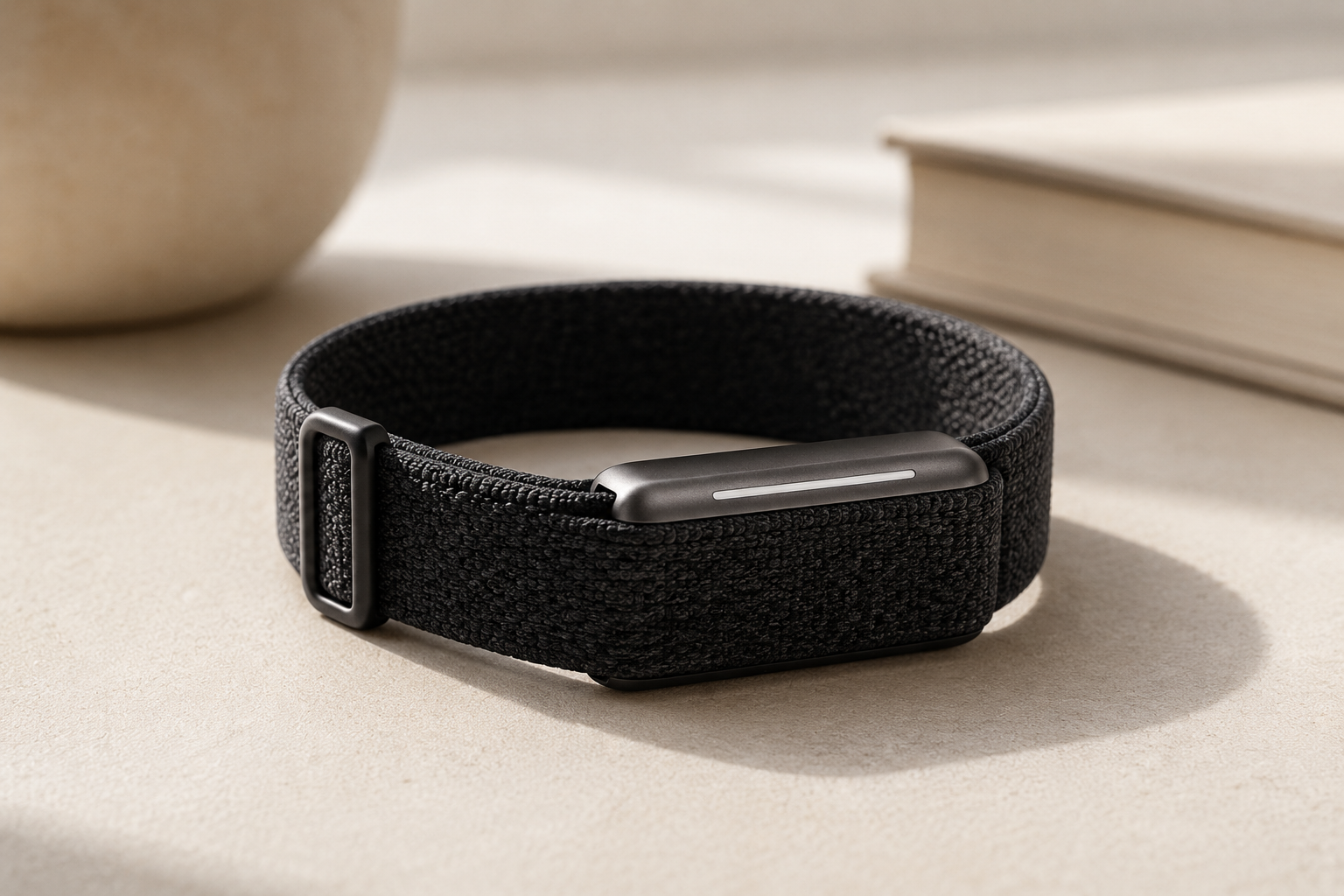
Among the continuous-monitoring wearables on the market, this article highlights one example built by a health-technology company focused specifically on longevity and biological-age tracking, rather than step counts and workout summaries alone. It's included here because it maps directly onto the criteria above.
How it works
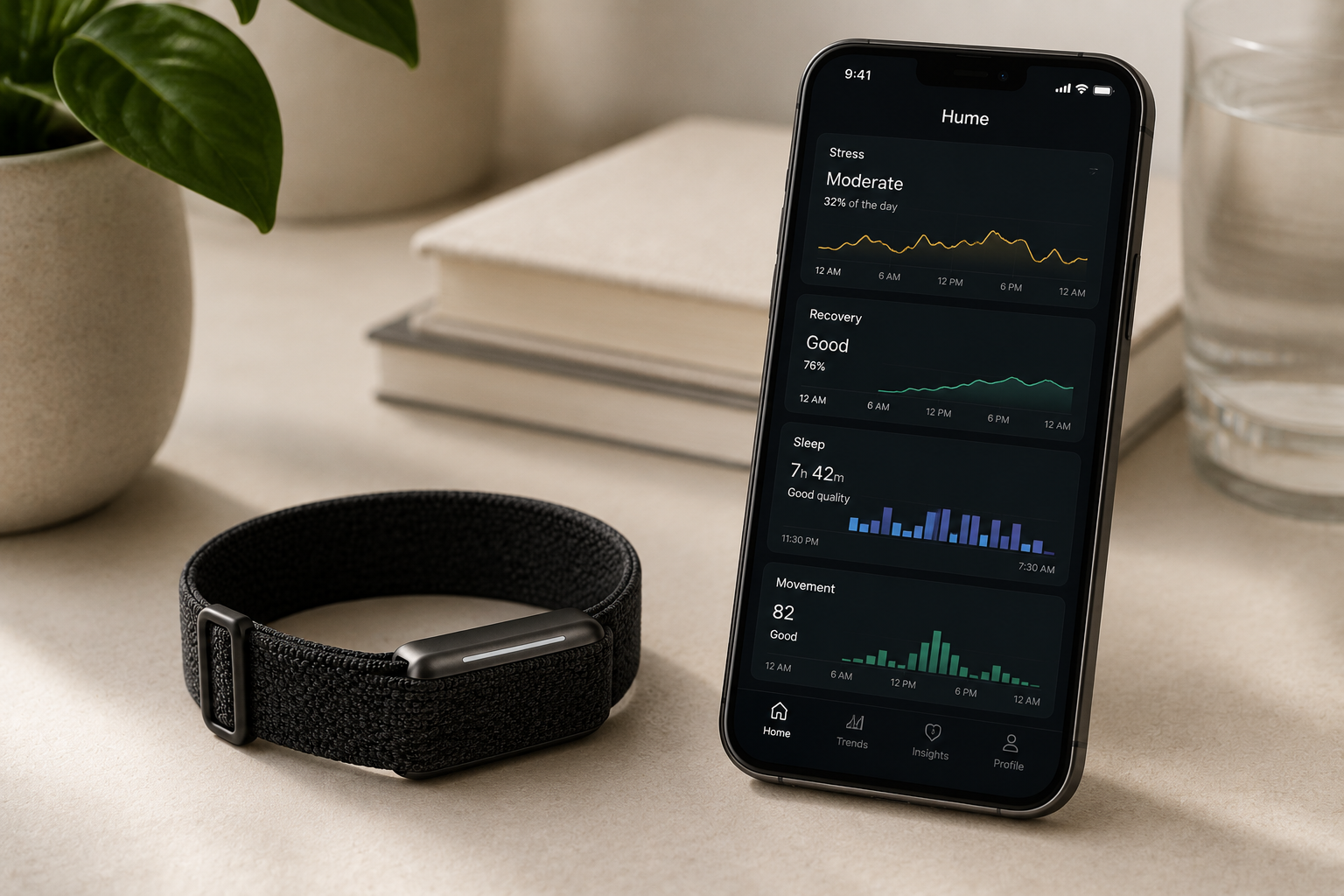
A multi-sensor optical array samples physiological signals more frequently than many conventional wearables. From that raw stream, the companion app derives HRV, blood oxygen (SpO2), skin temperature trend, sleep stages, activity level, and strain-versus-recovery balance — then translates them into an estimated biological age and a metabolic trend score, so it's clear whether daily habits are helping or working against long-term health.
At a glance
Battery life
Up to 14 days
Water resistance
IP68, 1m / 2h
Compatibility
iOS 14+ / Android 8+
Data access
No mandatory subscription
How it's typically used
Wear it continuously
Day and night, to capture sleep, recovery, and activity without gaps.
Check the app daily
Review the previous day's metrics in a few minutes.
Watch trends, not days
Weeks and months matter more than any single day's fluctuation.
Adjust from there
Sleep, training, stress management — shaped by the patterns the data shows.
Worth noting: like any wearable in this category, this device is a tool for tracking habits and trends, not a diagnostic instrument. Any meaningful change in the data is worth discussing with a qualified health professional.
How the two approaches compare
Criteria
Traditional checkups
Continuous monitoring
Data frequency
A few times a year
Continuous, 24/7
Type of information
A single snapshot
A trend across time
Catching subtle change
Difficult between visits
More feasible, day by day
Recurring cost
Depends on insurance/tests
Varies; some models need no subscription
Replaces medical evaluation?
No — it is one
No — it's complementary
Frequently asked questions
Do I need a subscription to use a continuous tracking wearable?
It depends on the manufacturer. Several devices in this category give you access to your own raw data at no recurring cost, with an optional paid layer for deeper, AI-assisted interpretation.
Can these devices get wet or be worn in the shower?
Most current devices in this category carry an IP68 rating, meaning they resist dust and roughly 1 meter of water for up to two hours, though this varies by specific model.
Does continuous tracking replace seeing a doctor?
No. These tools track habits and physiological trends over time — they are not diagnostic instruments. Any meaningful or concerning change in the data should be discussed with a qualified health professional.
What should I compare before choosing one of these devices?
Sensor validation, battery life, comfort for round-the-clock wear, and whether you retain ownership and export rights over your own data. Warranty and return terms should always be confirmed directly with the manufacturer.
Closing thought
Long-term health rarely comes down to a single moment — it's the accumulated result of thousands of small daily decisions, most of them invisible while they're happening. The device highlighted above is one concrete way to close the gap this article opened with: turning a once-a-year snapshot into a continuous, trackable picture of what's actually going on.
Ready to see if it fits your routine?
Full specs, current pricing, and availability — straight from the manufacturer, no obligation to buy.
This content is for informational and educational purposes only. It does not replace professional medical advice, diagnosis, or treatment. Prices, specifications, and policies mentioned are set by the manufacturer and may change without notice — always confirm current information directly with the manufacturer before making a purchase decision.
Affiliate disclosure: this page may contain links to third-party products. If you make a purchase through one of these links, we may earn a commission at no extra cost to you. This does not influence the information presented above.