Gut & Wellness JournalDigestion · Gut Health · Weight
Gut health
Understanding the Gut Bacteria Connection to Weight and Digestive Comfort
Gut bacteria composition shifts gradually with diet, stress, and antibiotic use — often before digestive discomfort becomes noticeable.
Sponsored content: this article is a paid/affiliate feature about Bioma, a probiotic, prebiotic, and postbiotic supplement made by Bioma.Health. It includes general background on gut bacteria balance as well as a dedicated section on the product.
✎ Editorial Team⏱ 8 min read↻ Updated August 2026
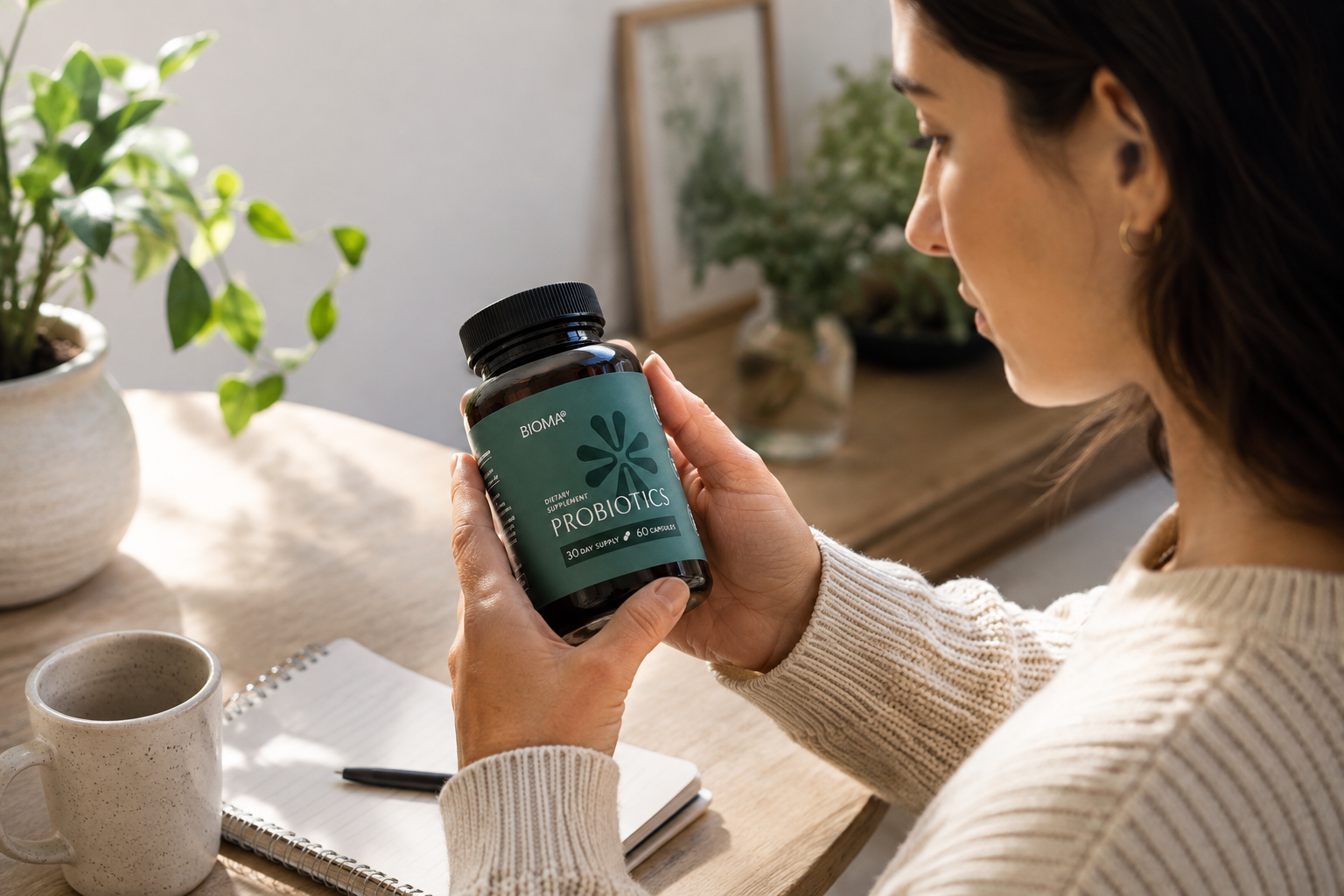
Gut bacteria composition shifts gradually, shaped by diet, stress, and other everyday factors.
Key takeaways
Gut bacteria composition can shift gradually due to diet, stress, antibiotic use, and other everyday factors — not just one meal or event.
Digestive symptoms like bloating, gas, and irregularity are common and multi-factorial; probiotics are one of several tools some people use to help manage them.
Supplement testimonials and percentages (like "X% of users felt...") are self-reported outcomes, not clinical trial results — individual results vary.
Introduction
The gut is home to trillions of bacteria, and the balance between beneficial and less beneficial strains shifts gradually in response to diet, stress, sleep, antibiotic use, and other everyday factors. This is a normal, ongoing process — not a sign that something is medically wrong.
Because these shifts happen gradually, they're often only noticed once digestive discomfort — bloating, irregularity, low energy — has already become a regular pattern.
This article looks at what gut bacteria balance means, what tends to influence it, some everyday clues worth noticing, and what to weigh before choosing a gut-health supplement — including a sponsored section on Bioma.
What gut bacteria balance means
The gut hosts a diverse community of bacteria whose balance can shift with diet and lifestyle.
Researchers have found that the composition and diversity of gut bacteria differs between individuals, and that certain patterns of bacterial balance are more commonly observed in people managing their weight. Some research associates gut microbiome composition with how efficiently the body harvests energy from food, among several other factors involved in weight regulation (PMC review, gut microbiome and obesity). This is an active area of research, and gut bacteria are understood to be one of many contributing factors — not the sole cause of weight changes.
Gut bacteria balance shifts gradually with everyday habits. It isn't the result of one meal, and it doesn't change back overnight either.
Because these shifts are internal and gradual, they're not something most people can consciously feel happening — the first sign is usually a change in digestion, energy, or appetite that's already been building for a while.
Why it shifts
Gut bacteria balance responds to a range of everyday inputs: the diversity and fiber content of what's eaten, recent antibiotic use, chronic stress, sleep quality, and hydration. None of these produce an immediate, obvious signal — a high-sugar meal doesn't announce its effect on bacterial balance the next morning.
Over time, though, cumulative patterns in these inputs are associated with the kinds of digestive symptoms — bloating, gas, irregularity, low energy — that eventually prompt people to look for an explanation.
Main contributing factors
Diet, antibiotics, stress, and sleep all contribute cumulatively to gut bacteria balance.
A diet high in processed food and added sugar, which can favor less beneficial bacteria.
Antibiotic use, which can reduce both harmful and beneficial bacteria at once.
Chronic stress, which is associated with changes in gut bacterial balance.
Low fiber and low probiotic-food intake, reducing food sources beneficial bacteria rely on.
Inconsistent sleep and hydration, which can indirectly affect digestive regularity.
Underlying chronic conditions, which should always be evaluated by a healthcare professional rather than self-diagnosed from digestive symptoms alone.
Who tends to be interested
People with ongoing digestive discomfort
Bloating, gas, or irregularity that shows up often enough to be noticeable, without a clear single cause.
Anyone recovering from a recent course of antibiotics
Antibiotics reduce bacterial diversity broadly, which is why replenishing beneficial strains afterward is commonly discussed.
People under sustained stress
Chronic stress is a well-documented factor associated with digestive changes.
People supporting a weight-management routine
Alongside diet and exercise, some people are interested in gut bacteria balance as one additional factor.
Everyday clues worth noticing
A few common, everyday clues are sometimes associated with gut bacteria imbalance, though all of them have multiple possible causes:
Bloating, gas, or a feeling of fullness that shows up regularly.
Irregular bowel habits, including constipation or looser stools.
Increased cravings or a harder time managing appetite.
Low energy or brain fog that isn't clearly explained by sleep or workload.
Skin or mood changes some people associate with digestive health.
None of these symptoms are specific to gut bacteria balance on their own, and persistent or severe digestive symptoms should always be evaluated by a healthcare professional rather than self-managed with a supplement alone.
Why paying attention matters
Worth considering: digestive comfort and gut bacteria balance are influenced by cumulative daily habits. Addressing contributing factors — diet, stress, sleep — sooner rather than later is generally easier than trying to reset a pattern that's been established for a long time. This is general wellness guidance, not a claim about diagnosing or treating any condition.
Ongoing digestive discomfort can also affect day-to-day energy, mood, and eating patterns. If symptoms are persistent, severe, or include things like unexplained weight loss, blood in stool, or significant pain, a healthcare professional should be consulted rather than relying on a supplement alone.
Myths and facts
MythAll probiotic supplements are basically the same.
FactStrain type, dose, and delivery method (whether live cultures survive stomach acid) vary widely between products, and research suggests these differences affect how much benefit a person may notice.
MythProbiotics work within a day or two.
FactGut bacteria colonization generally takes weeks; manufacturers commonly suggest 6–8 weeks for initial changes and several months for fuller effects, and individual timelines vary.
MythWeight is only about calories in versus calories out.
FactCalorie balance remains central, but some research suggests gut bacteria composition may also play a role in energy harvest and metabolism — it's one of several contributing factors, not a replacement for diet and exercise.
MythA brand's "X% of users felt..." statistic is the same as a clinical trial result.
FactSelf-reported survey percentages published by a brand are not peer-reviewed clinical trial data. They reflect a specific group's self-reported experience, and individual results vary.
How to evaluate a gut-health supplement
A few criteria help separate a well-formulated supplement from one that mostly adds cost.
The gut-health supplement category is crowded. A few criteria help evaluate whether a specific product is well-formulated:
Strain-specific, published research
It's worth checking whether the specific bacterial strains used have documented research behind them, rather than a vague "probiotic blend" with no strain names listed.
Delivery technology that protects live cultures
Standard capsules can be broken down by stomach acid before reaching the gut; delayed-release or acid-resistant capsule technology is one way manufacturers attempt to address this — though claims about how well a specific product's technology performs should be weighed as manufacturer claims unless independently verified.
Transparent, labeled ingredient list
A visible label with strain names and amounts, rather than a proprietary blend that hides individual dosages.
Realistic expectations about timeline
Gut bacteria adaptation takes weeks to months — any product suggesting overnight results is worth approaching with skepticism.
What a good supplement should have
Named, researched strains
Specific bacterial species and strains, not just a generic "probiotic blend."
Acid-resistant delivery
A delivery method designed to help live cultures survive to the gut.
Transparent labeling
Clear dosage information rather than hidden proprietary blends.
Honest expectations
Clear communication that results vary and take consistent use over weeks to months.
With those criteria in mind, this next section is a sponsored look at one specific supplement: Bioma.
Sponsored feature
A sponsored look at Bioma
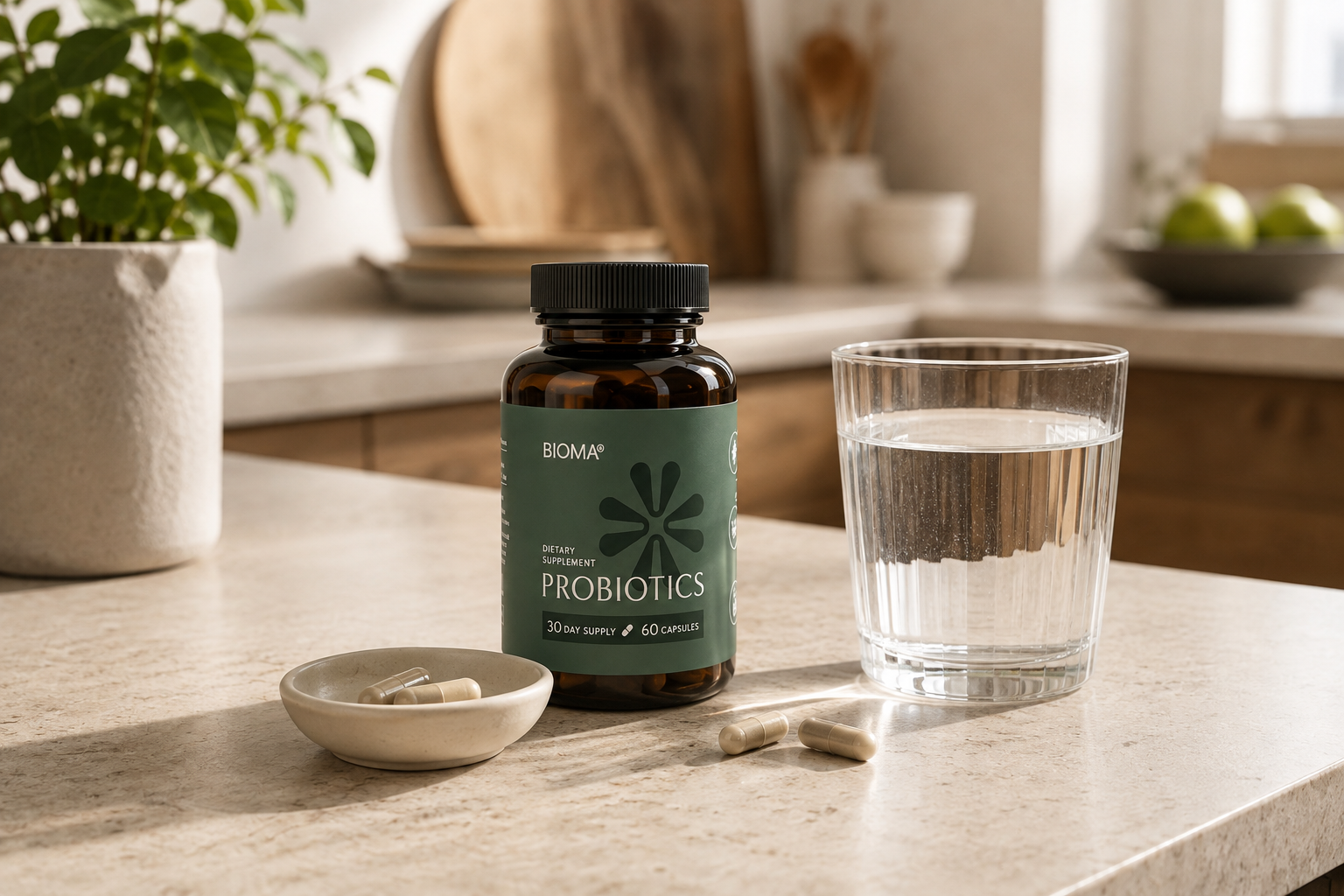
This section is a paid/affiliate feature about Bioma, made by Bioma.Health — a probiotic, prebiotic, and postbiotic supplement formulated to support gut bacteria balance, digestive comfort, and weight-management routines.
It isn't the only gut-health supplement on the market, and other reputable options exist. This section focuses specifically on Bioma because this article is sponsored content about that product.
What it's formulated with
Bifidobacterium (breve, longum & lactis) — probiotic strains studied in relation to digestive comfort. A systematic review found that some specific probiotic strains are associated with reduced bloating, gas, and improved bowel regularity in some studies, though effects vary by strain and by individual (PMC systematic review, probiotics and GI symptoms).
Xylooligosaccharides (XOS) — a prebiotic fiber intended to selectively feed beneficial bacteria such as Bifidobacterium, which may support regularity as part of a fiber-inclusive diet.
Tributyrin — a compound that breaks down into butyrate, a short-chain fatty acid studied for its role in gut barrier integrity. Research reviews describe butyrate as an energy source for colon cells that supports epithelial barrier function and helps regulate local inflammation (PMC narrative review, butyrate and gut health).
The research cited above describes general findings on these ingredient categories from published literature. It does not represent clinical trials of the Bioma product itself, and individual results vary.
At a glance
Format
Delayed-release capsule (manufacturer spec)
Dietary fit
Vegan, gluten-free, stimulant-free
Suggested use window
3+ months (manufacturer guidance)
Outcome data
Internal user survey, not a clinical trial
How it's typically used
Take as directed on the label, generally once daily.
Pair with a fiber-inclusive diet and adequate hydration, which supports the bacteria the supplement is intended to feed.
Allow several weeks for gut bacteria changes — the manufacturer suggests 6–8 weeks for initial changes and at least 3 months for fuller effects.
Consult a healthcare professional before combining with antibiotics, immunosuppressants, or other medications, and if pregnant, breastfeeding, or managing a chronic condition.
Worth noting: this product has not been evaluated by the Food and Drug Administration. It is not intended to diagnose, treat, cure, or prevent any disease, and it should not be substituted for medical advice or medical intervention. Exercise and a healthy diet are necessary to achieve and maintain any weight-related outcome. Please consult a qualified healthcare provider when making medical decisions.
General comparison
For context, here's a general, non-favorable comparison between diet-and-lifestyle-only approaches to gut health and adding a targeted probiotic/prebiotic/postbiotic supplement such as Bioma. Neither approach is presented here as a replacement for the other — for most people, a supplement is additive to diet and lifestyle, not a substitute for them.
Criteria
Diet & lifestyle only
Adding a targeted supplement
Consistency of specific strains
Depends on food sources, which vary day to day
Consistent, labeled dose per serving (per manufacturer)
Effort required
Meal planning and food sourcing
Daily capsule, still requires diet and lifestyle support
Cost
Varies by food choices
Ongoing supplement cost
Evidence base
Broad general nutrition research
Strain-specific research plus manufacturer-reported outcomes
Replaces medical evaluation for persistent symptoms?
No
No — neither approach replaces professional care
Frequently asked questions
How is a probiotic like Bioma different from fat burners or weight-loss pills?
Bioma is a probiotic, prebiotic, and postbiotic supplement, not a stimulant-based fat burner. It's formulated to support gut bacteria balance rather than to directly stimulate metabolism, and the manufacturer states it is stimulant-free.
How is Bioma different from other probiotic supplements?
The manufacturer states that Bioma uses a delayed-release capsule intended to survive stomach acid better than standard capsules, so more live cultures reach the gut. This is a manufacturer claim about its own formulation rather than an independently published, peer-reviewed comparison.
How fast can results be expected from a gut-health probiotic?
The manufacturer suggests it typically takes 6 to 8 weeks for gut bacteria to establish, and recommends at least 3 months of consistent use alongside a healthy diet. Individual results vary, and this is general manufacturer guidance rather than a guaranteed timeline.
Can a probiotic supplement cause bloating?
Some people experience temporary digestive adjustment when introducing a new probiotic. If bloating occurs or persists, it's worth speaking with a healthcare professional, especially if other medications or conditions are involved.
Does Bioma contain allergens?
The manufacturer states the formula is designed to be hypoallergenic, but any supplement may contain ingredients that could trigger a reaction in sensitive individuals. Always check the ingredient label and consult a healthcare professional if you have known allergies.
Is a gut-health supplement like Bioma safe during pregnancy or breastfeeding?
Anyone who is pregnant or breastfeeding should consult a healthcare professional before starting any new supplement, including probiotics.
Can Bioma be taken with other medications?
The manufacturer recommends consulting a healthcare professional before combining Bioma with antibiotics, immunosuppressants, antifungals, or other prescription medications, and suggests spacing doses from antibiotics to avoid reducing probiotic effectiveness.
Conclusion
Gut bacteria balance is shaped by cumulative daily habits — diet, stress, sleep, and antibiotic use — rather than any single event. Recognizing the everyday clues and understanding what influences that balance is useful context before deciding whether a supplement fits into a broader routine.
There are several ways to support gut health, from diet and lifestyle changes to targeted supplements. Bioma, featured above as a sponsored product, is one example of the second category — but deciding what's right for any individual should factor in personal health history, current medications, and, where relevant, guidance from a healthcare professional. Nothing in this article should be read as medical advice or as a claim that any supplement can diagnose, treat, cure, or prevent disease.
GW
About this article
Prepared by the Gut & Wellness Journal editorial team as a sponsored/affiliate feature, using publicly available product information and general physiology references cited inline. Not a substitute for professional medical advice.
Want the full ingredient list and current availability of Bioma?
Pricing, availability, and return terms can change, and are set by the manufacturer. Tap below to see the most up-to-date details directly from Bioma.Health.
This content is for informational and educational purposes only and does not constitute medical advice. It does not replace professional medical advice, diagnosis, or treatment. Content and statements referenced about Bioma have not been evaluated by the Food and Drug Administration. This product is not intended to diagnose, treat, cure, or prevent any disease. Exercise and a healthy diet are necessary to achieve and maintain weight-related outcomes. Prices, specifications, and policies mentioned are the responsibility of the manufacturer and may change without notice — always confirm current information directly with the manufacturer before making a purchase decision.
Advertising / affiliate disclosure: this is a sponsored article that contains affiliate links to Bioma. If you make a purchase through these links, we may earn a commission at no extra cost to you. This relationship may have influenced which product is featured, though it did not change the factual accuracy of the information presented.