Hair & scalp health
Silent Strand Signals: Why Hair Thinning Often Starts Long Before You Notice It
By the time a wider part or a thinner ponytail catches your eye, the process behind it has usually been underway for months.
Hair & scalp health
By the time a wider part or a thinner ponytail catches your eye, the process behind it has usually been underway for months.

Follicles shift into a resting phase quietly, in small numbers, well before overall density changes are visible.
Key takeaways
Hair thinning rarely announces itself. There's no single morning where density visibly drops — instead, a small percentage of follicles shift out of their active growth phase at a time, so gradually that the change is nearly impossible to notice day to day.
By the time it becomes obvious in a mirror or a photo, the underlying shift has usually been building for a while. That gap — between what's happening at the follicle level and what's actually perceptible — is what this article is about.
Below: what causes that gap, who tends to notice it first, how to recognize the early clues, and what to weigh before adding a scalp-care routine to address it.
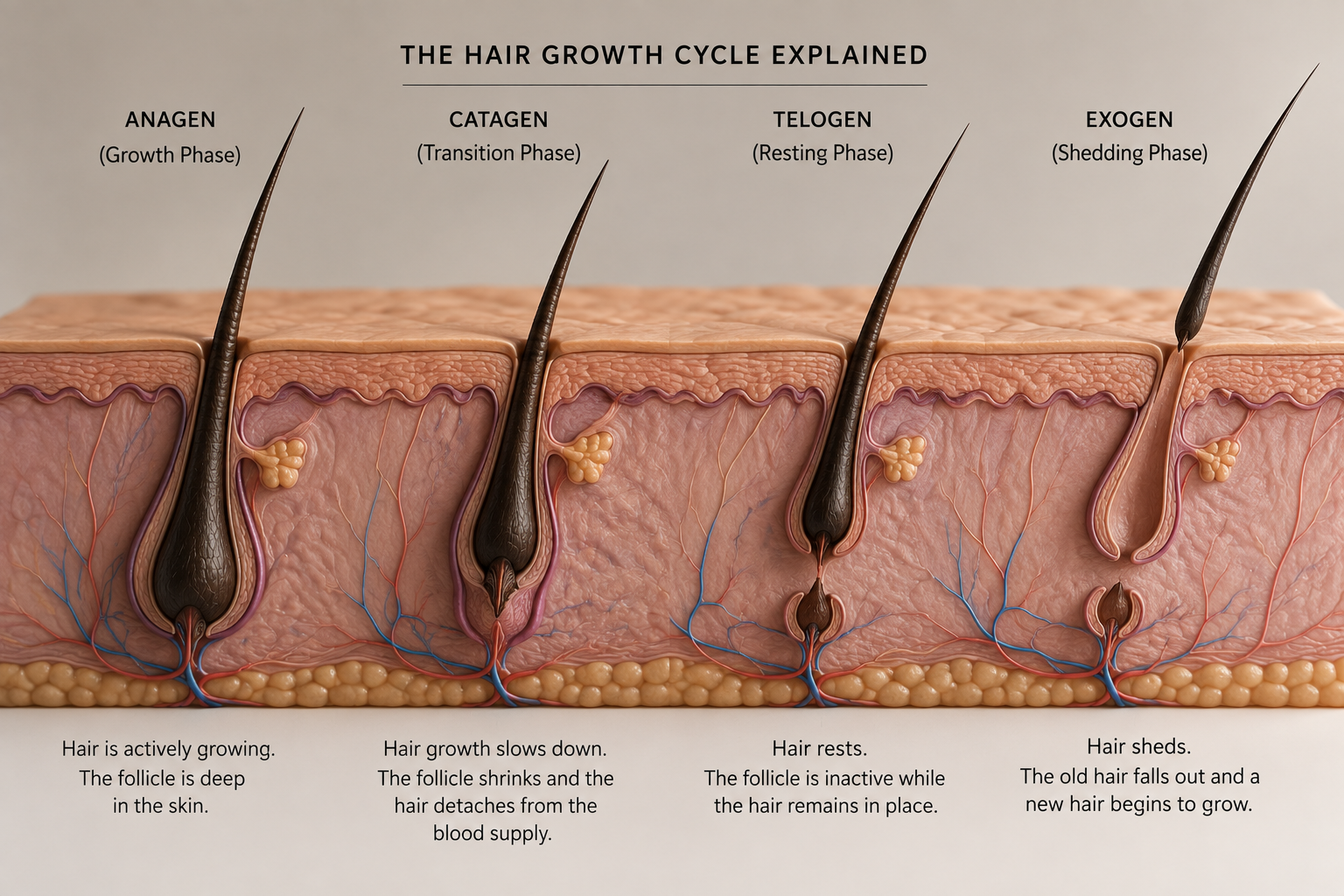
The hair growth cycle explained.
Hair grows in cycles — an active growth phase, a short transition, and a resting phase before the strand eventually sheds and a new one begins. On a healthy scalp, these phases are staggered across thousands of follicles, so growth and shedding balance out and density looks stable.
Thinning isn't usually a single event. It's a slow shift in the ratio of follicles that are actively growing versus resting.
When more follicles than usual drift into an extended resting phase, or when regrowth cycles start producing visibly finer strands, overall density edges down. Because it happens gradually and unevenly across the scalp, it's easy to miss until the cumulative effect crosses a visible threshold.
Several factors influence how long a follicle stays in its growth phase and how healthy the strand it produces is: genetic sensitivity to hormonal signals, blood flow to the scalp, the nutrient supply available to actively growing follicles, and the general stress load the body is under.
None of these produce an obvious symptom on their own. A slightly under-nourished scalp doesn't hurt. Reduced circulation doesn't itch. The only real feedback loop is the eventual, cumulative change in how the hair looks and feels — which, again, tends to show up well after the underlying shift began.

Common causes of hair thinning.
Genetic sensitivity is one of the strongest predictors, on either side of the family.
Extended stress without adequate recovery is a well-documented trigger for temporary shedding increases.
Postpartum recovery, perimenopause, and other hormonal shifts frequently coincide with noticeable changes in shedding.
Repeated mechanical and thermal stress on strands and follicles compounds over years, not days.
Precise measurement of follicle activity requires clinical tools, but a few everyday clues are worth paying attention to:
None of these on their own confirm a trend — shedding naturally fluctuates with seasons, stress, and hormones. What matters is whether the pattern is consistent over weeks and months, which is exactly why tracking it, rather than relying on memory, tends to be more useful.
Waiting until thinning is obvious before addressing contributing factors — nutrition, scalp circulation, stress, styling habits — generally means starting from a more advanced stage, with a narrower window for a routine to make a visible difference.
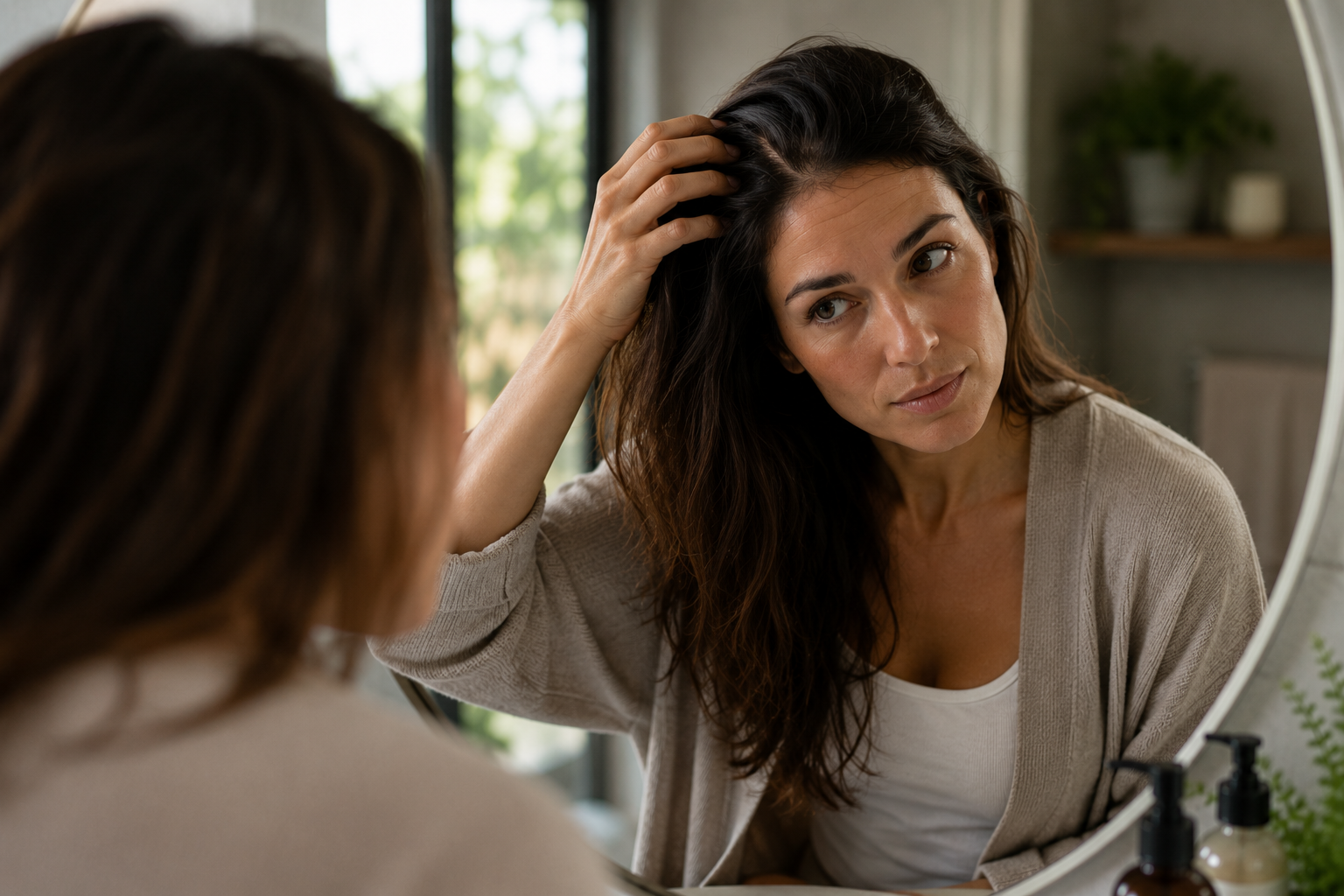
Why healthy hair matters more than you think.
The scalp-care category is crowded. A few criteria help separate a genuinely useful daily routine from something that mostly adds noise (and cost):
A single application does very little. Value comes from a formula that's easy enough to use daily, since the hair cycle only responds to sustained input.
It's worth checking whether the ingredients used have a documented history — either in traditional use or in published research — rather than relying on vague "proprietary blend" claims alone.
Lightweight, non-greasy formulas are far more likely to actually get used every day than heavy oils or products with a strong scent or residue.
Paraben-free and gentle formulas reduce the odds of irritation from daily use, which matters more here than in an occasional-use product.
Recognizable, well-documented ingredients rather than an opaque blend.
Lightweight application that fits into an existing routine without extra steps.
Free from parabens and harsh additives, suitable for most scalp types.
Clear information on how much product is included, how long it lasts, and what it costs to maintain the routine.
With those criteria in mind, it's worth looking at how one specific product in this category holds up — and what it's actually formulated with.
One option in this category
Among the daily scalp sprays available today, this article highlights one example — a leave-in formula meant to be applied directly to the scalp as part of an existing hair-care routine, rather than a standalone treatment requiring extra steps.
It isn't the only option on the market, and it's presented here purely to illustrate how the criteria above translate into an actual product: HaloGrow Hair Spray.
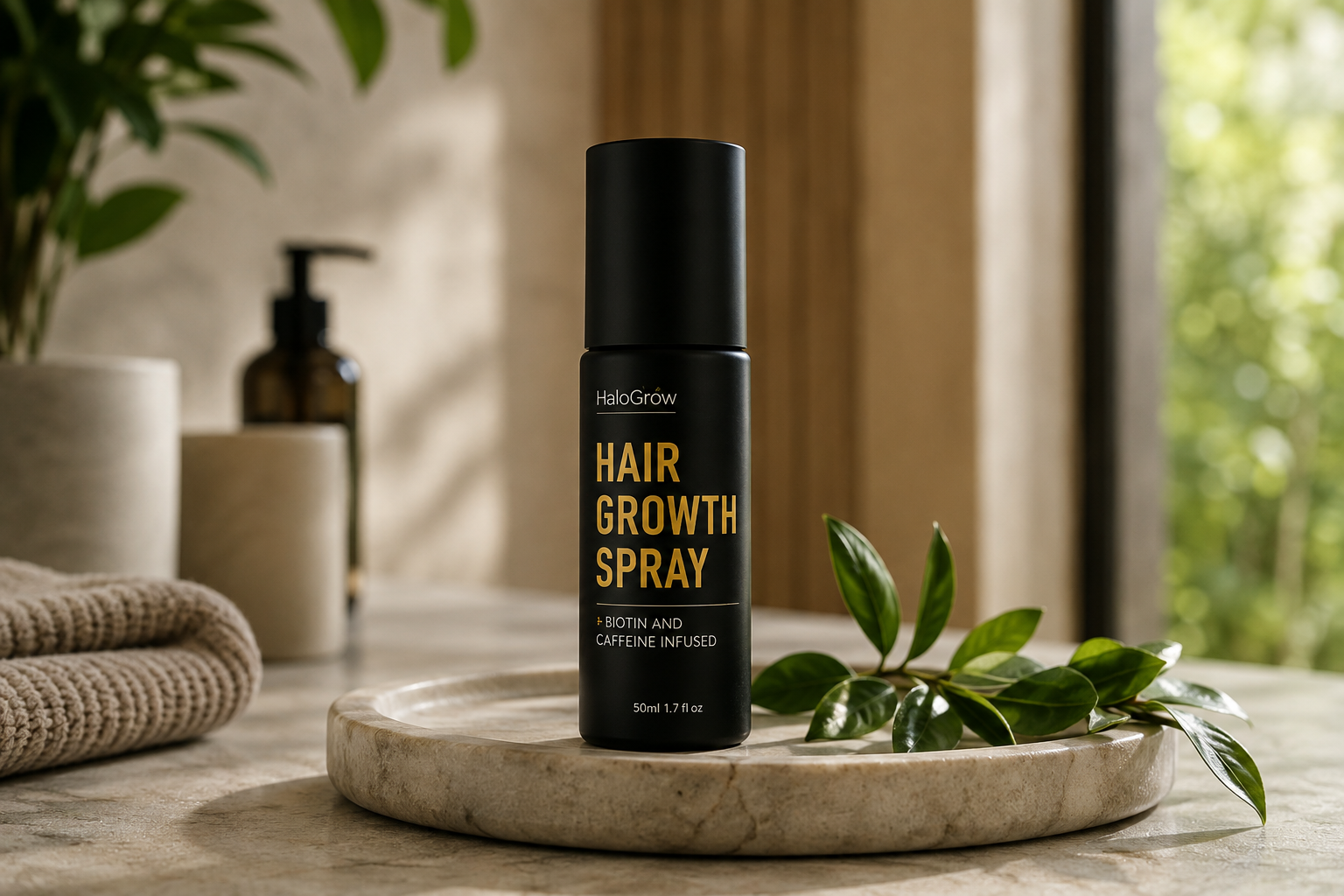
Our recommendation.
The formula combines five ingredients with a documented history in hair and scalp care: biotin, often called the "beauty vitamin" for its role in keratin production; castor oil, valued for conditioning the scalp and coating strands; aminexil, a scientifically developed compound associated with supporting the appearance of fuller, healthier-looking hair; caffeine, known for invigorating the scalp; and He Shou Wu, a botanical long used in traditional Chinese herbalism for hair vitality.
It's applied as a light, leave-in spray rather than a rinse-out treatment, which is part of what makes daily use realistic.
For context, here's how occasional or one-off hair treatments generally compare to a consistent daily scalp-care routine:
| Criteria | Occasional treatments | Daily scalp-care routine |
|---|---|---|
| Application frequency | Sporadic, as remembered | Once daily, built into an existing habit |
| Alignment with hair growth cycle | Limited — cycles span weeks to months | Better aligned, since input is sustained |
| Ease of tracking results | Difficult without a consistent baseline | Easier, since the routine itself is consistent |
| Recurring cost | Varies widely by treatment type | Predictable, based on bottle size and frequency |
| Replaces a dermatologist evaluation? | No | No — it's a complementary daily habit |
Most formulas in this category are designed for once-daily use, ideally applied to a clean scalp after showering, and used consistently rather than occasionally.
Many sprays work best on a slightly damp scalp, since this helps the formula distribute evenly, though most can also be used on dry hair if preferred.
Gently massaging the scalp for a minute or two after application is generally recommended, as it helps distribute the product evenly and may support circulation.
This varies by brand and bottle size, but many once-daily formulas are designed to last roughly one to two months per bottle with consistent use.
Hair growth cycles are slow, so most people who report noticeable changes describe several weeks of consistent daily use before seeing a difference, with continued use associated with more visible results over time.
Many formulas are designed to be gentle, but anyone with a sensitive scalp should patch-test a small area first and check the full ingredient list before regular use.
Anyone with an existing scalp condition, such as dandruff, psoriasis, or eczema, should consult a dermatologist before adding a new topical product to their routine.
Hair density rarely changes because of one dramatic event — it shifts gradually, as small daily factors (circulation, nutrition, stress, styling habits) accumulate over months. Learning to recognize the early, easy-to-miss signals — and building a consistent routine that addresses the contributing factors — tends to matter more than reacting once thinning is already obvious.
There are several ways to build that routine, from professional consultations to daily topical products. The spray highlighted above is one example of the second category, formulated for daily, leave-in use — but the right approach for any individual should factor in personal history, goals, and, where relevant, guidance from a dermatologist.
Prepared by the Strand & Scalp Journal editorial team from publicly available product information and general hair-biology literature. Not a substitute for professional medical or dermatological advice.
Pricing, availability, and return terms can change. Tap below to see the most up-to-date details directly from the manufacturer.
See full detailsThis content is for informational and educational purposes only. It does not replace professional medical or dermatological advice, diagnosis, or treatment. Results can vary from person to person. Prices, specifications, and policies mentioned are the responsibility of the manufacturer and may change without notice — always confirm current information directly with the manufacturer before making a purchase decision.
Affiliate disclosure: this page may contain links to third-party products. If you make a purchase through one of these links, we may earn a commission at no extra cost to you. This does not influence the information presented above.