Wellness Signal Tracking Explained — A Sponsored Look at the Hume Band
Advertisement · Sponsored / affiliate article featuring the Hume Band
Vital Metrics Lab Health · Habits · Monitoring

Wellness tracking

Understanding the Physiological Signals Behind Everyday Wellness Tracking

Many everyday wellness metrics — like heart rate variability or sleep quality — shift gradually, often below the threshold of conscious awareness.

Sponsored content: this article is a paid/affiliate feature about the Hume Band, a wearable made by Hume Health. It includes general background on wellness tracking as well as a dedicated section on the product.

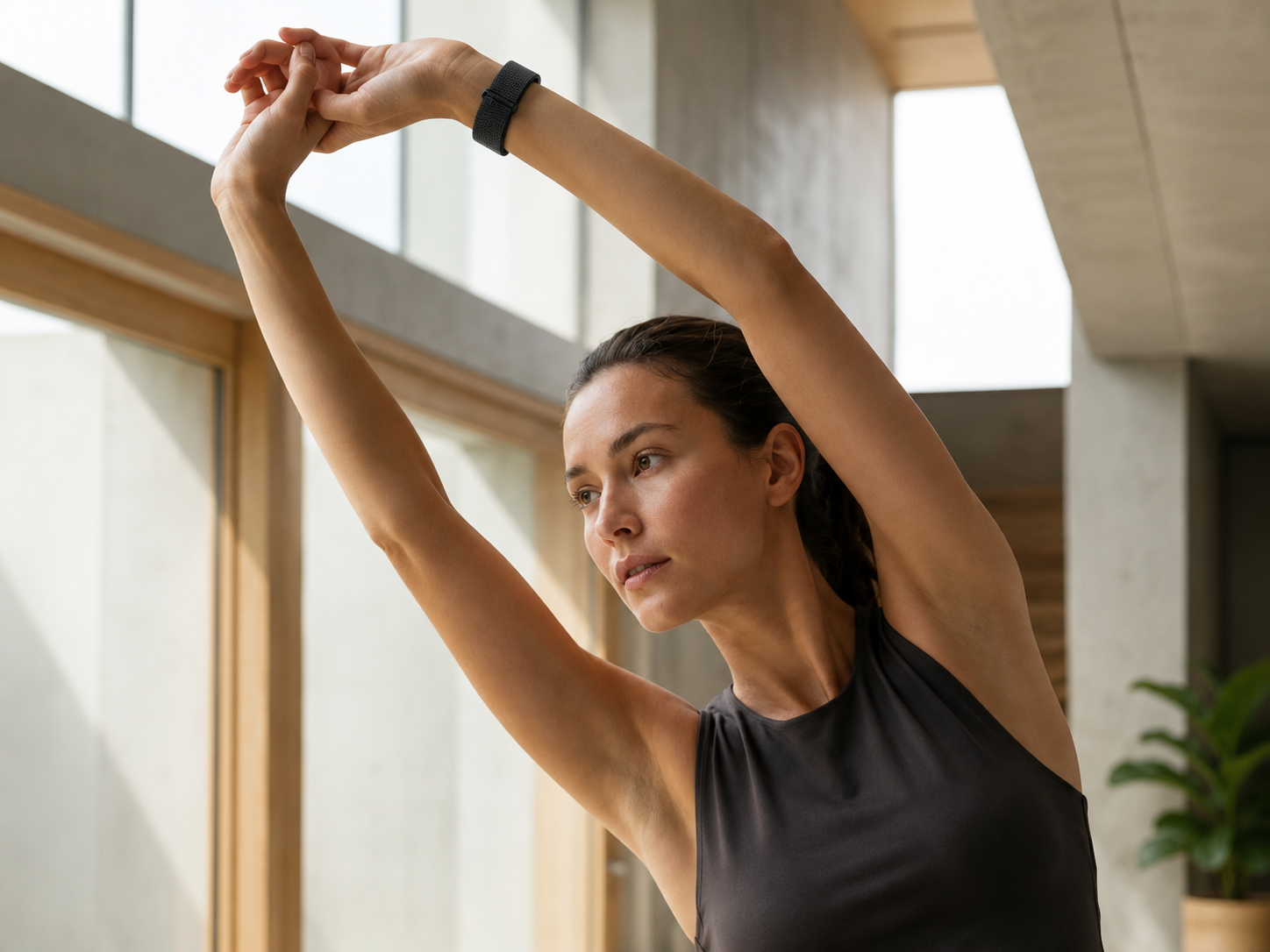
Illustration: wellness metrics such as heart rate and sleep quality change gradually over time.

Everyday wellness metrics can shift gradually, in ways that are hard to notice without tracking them over time.

Key takeaways

  • Everyday wellness metrics — like heart rate variability or sleep quality — often shift gradually, below the threshold of conscious awareness.
  • Periodic check-ups capture a snapshot at one point in time; daily habits shape wellness in the time between them.
  • Wearable tracking tools can display changes in recorded wellness metrics while properly worn, and are meant to complement — not replace — medical care.

Introduction

Long before someone consciously notices a change in how they feel day to day, measurable shifts in metrics like sleep quality, heart rate variability, or recovery capacity are often already underway. This is a normal, expected part of how the body responds to daily life — not a sign that something is wrong.

The reason these shifts are easy to miss is simple: they're rarely felt directly. They have to be measured, tracked, and reviewed over time to become noticeable.

This article looks at why that gap between what's measurable and what's consciously felt exists, who tends to be interested in closing it, some everyday clues worth noticing, and what to weigh before choosing a wearable to track wellness metrics — including a sponsored section on the Hume Band.

What this is about

Illustration: everyday physiological metrics like heart rate variability and sleep can change without producing a noticeable symptom.

Many day-to-day physiological metrics — such as resting heart rate variability (HRV) or sleep efficiency — can shift gradually without producing any change a person would consciously notice. HRV reflects the variation in time between heartbeats and is influenced by the autonomic nervous system, sleep, stress, and overall recovery (Cleveland Clinic).

Small day-to-day shifts in wellness metrics are normal. The challenge is simply that they're easy to miss without a consistent way to track them.

Without a way to track metrics over time, a gradual shift in things like sleep quality or recovery can be easy to miss until it's already noticeably affected day-to-day energy or mood. That's the main reason people turn to tracking tools in the first place — not to diagnose anything, but to make patterns more visible.

Why it happens

Several everyday factors influence how wellness metrics move over time: how much of the day is spent active versus sedentary, how demanding recent activity has been, how consistent sleep timing is, and how much unmanaged stress the body is carrying. Sleep in particular plays a wide-ranging role in daily functioning and long-term wellness (NIH News in Health).

None of these produce an obvious, immediate signal. A night of lower-quality sleep might still log a normal number of hours. A slightly lower HRV reading isn't something most people would consciously feel. At best, someone might notice general fatigue that's easy to attribute to something else entirely.

Main contributing factors

  • Irregular or inconsistent sleep timing, even when total sleep duration seems adequate.
  • Extended periods of stress without dedicated recovery time between demanding stretches.
  • Sedentary habits or exercise that isn't well matched to current fitness level.
  • Inconsistent eating patterns, with widely varying timing and composition.
  • No ongoing record of one's own wellness metrics over time.
  • Relying on how you feel alone as the main signal, rather than tracked data plus how you feel.

Who tends to be interested

Adults in high-demand routines

Professionals between 30 and 60 who accumulate stress and sleep debt without necessarily noticing the cumulative effect day to day.

People with a personal interest in family health history

Family health history can motivate interest in tracking general wellness metrics over time — though any specific health concerns should always be directed to a healthcare professional, not inferred from a wearable.

People who exercise regularly

Anyone training often but unsure whether they're recovering enough between sessions.

People curious about their daily patterns

Anyone who wants a more objective view of their sleep, activity, and recovery than memory alone provides.

Everyday clues worth noticing

Precise measurement of physiological metrics requires tracking tools, but a few everyday, subjective clues are sometimes worth paying attention to:

  • Persistent tiredness even after what feels like an adequate amount of sleep.
  • Noticeably slower recovery after moderate physical effort.
  • Mood, focus, or energy shifts with no obvious cause.
  • Weight or body composition changes without an obvious shift in habits.
  • Sleep that feels unrestorative, even at a seemingly normal duration.

These clues are useful but limited — they're subjective and easy to rationalize away, and they don't show magnitude or trend on their own. That's one reason some people choose to pair self-perception with recorded, trackable data.

Why paying attention matters

Worth considering: daily habits compound over time. Waiting longer to notice a shift in sleep, activity, or recovery patterns generally means a longer road back to a routine that feels balanced — not because anything is medically wrong, but simply because habits are easier to adjust before a pattern becomes deeply established.

Not paying attention to gradual shifts in wellness metrics for an extended period is generally associated with lower day-to-day energy, reduced motivation to maintain healthy habits, and a harder time identifying what changed once a routine starts to feel off. None of this is a substitute for medical evaluation of any specific health concern.

Myths and facts

MythIf I feel fine, nothing has changed.
FactFeeling fine day to day doesn't mean nothing has changed — wellness metrics can shift gradually without a noticeable difference in how someone feels.
MythAnnual check-ups are enough to understand your wellness trends.
FactPeriodic check-ups capture a single snapshot. The habits that shape day-to-day wellness happen continuously, between one visit and the next.
MythA biological-age score from an app is a clinical measurement.
FactBiological-age and similar composite scores offered by wearables and apps are proprietary wellness estimates based on the manufacturer's own algorithm — not objective medical measurements or diagnoses.
MythWearables are only good for counting steps.
FactMany current wellness wearables also track metrics like heart rate variability and sleep stages, though independent research shows validation and accuracy vary significantly by brand and by metric.

How to evaluate a tracking device

Given how many wellness devices and apps are on the market today, a few criteria can help with evaluating one:

Consistency over one-off measurements

A single data point says little on its own. The value tends to come from observing trends across weeks and months.

Published, independent sensor validation

It's worth checking whether the manufacturer publishes accuracy testing and whether independent researchers have validated specific metrics. A recent systematic review found that only a small share of commercially available wearables have published validation studies, and that accuracy varies substantially by metric and by device (PMC systematic review, 2024). That review also found accuracy for metrics like sleep staging, stress, and blood pressure to be notably inconsistent across devices — which is one reason this article does not repeat blood-pressure claims made elsewhere about wearables.

Battery life suited to regular use

A device that needs to come off frequently to charge creates gaps in the data. Charging, fit, and sensor quality all affect how much of the day is actually captured — a device only tracks while it's properly worn, not truly around the clock without interruption.

Comfortable enough for extended, regular wear

Sleep and overnight recovery tracking work only as well as the device is actually worn consistently, so comfort for extended daily wear matters.

What a good device should have

Clearly labeled data

Raw sensor metrics kept clearly distinct from any proprietary composite scores or estimates.

Built for daily wear

Water and sweat resistance suited for the gym, the shower, and everyday life.

Data transparency

Clarity about who owns the data collected and whether it can be exported.

Accessible, appropriately cautious interpretation

Guidance that avoids overstating what a consumer wearable can detect, and encourages professional follow-up when relevant.

With those criteria in mind, this next section is a sponsored look at one specific device: the Hume Band.


Sponsored feature

A sponsored look at the Hume Band

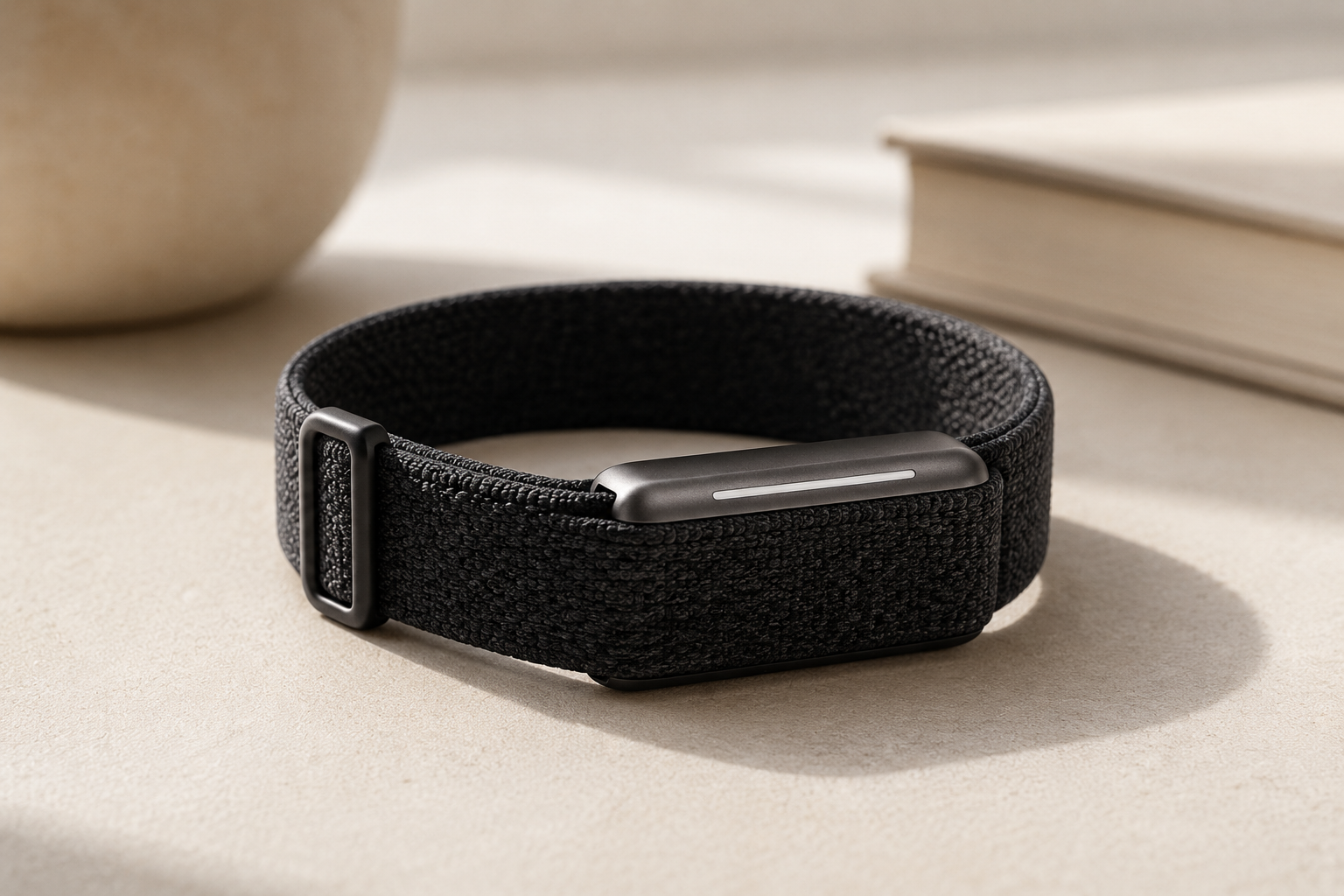
Hume Band wearable

This section is a paid/affiliate feature about the Hume Band, made by Hume Health — a wearable built to track wellness metrics and generate proprietary composite scores, including an estimated biological age, beyond traditional step-and-workout tracking.

It isn't the only wearable on the market, and other reputable options exist. This section focuses specifically on the Hume Band because this article is sponsored content about that product.

How it works

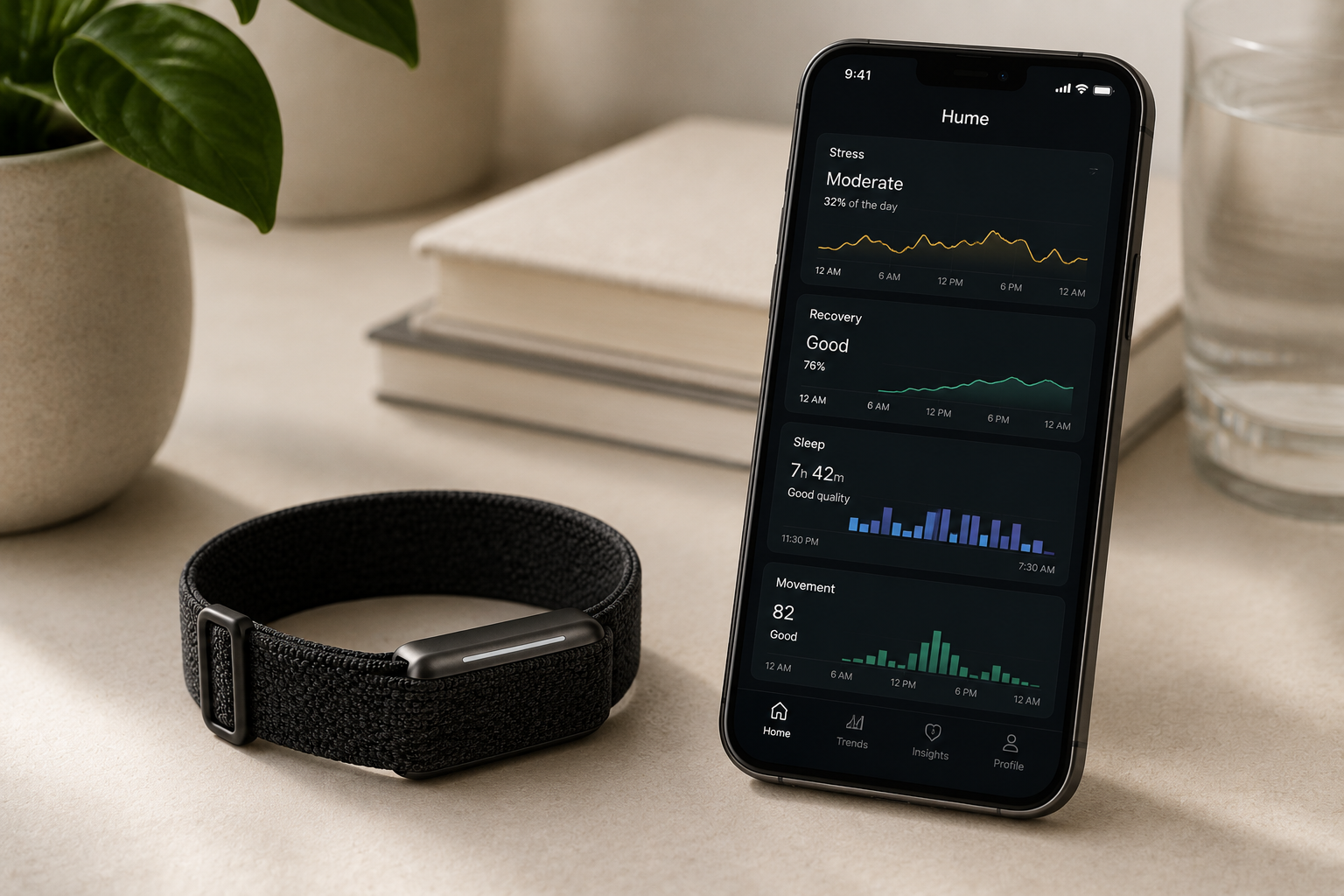
Illustration: multi-sensor wearable capturing physiological data from the wrist.

The device uses a multi-sensor optical array to capture physiological data from the wrist. From those sensors, the companion app processes recorded metrics such as heart rate variability (HRV), blood oxygen (SpO2), skin temperature, sleep stages, activity level, and strain/recovery.

That raw sensor data is then translated inside the app into proprietary wellness estimates — including an estimated biological age and a metabolic trend score — designed to reflect general lifestyle patterns. These are proprietary, algorithm-based wellness estimates produced by the manufacturer, not objective medical measurements, diagnoses, or risk assessments, and they are not intended to identify cardiovascular or metabolic disease risk.

Note on blood pressure: this article does not repeat blood-pressure monitoring claims associated with this device. Cuffless blood-pressure estimation from wearables is an area where independent validation research shows accuracy is inconsistent, and any such feature should only be relied on to the extent it carries applicable regulatory authorization matching the specific claim made — which buyers should verify directly with the manufacturer before relying on it for any health decision.

At a glance

Battery life
Up to 14 days (manufacturer spec)
Water resistance
Rated for daily wear (verify exact rating with manufacturer)
Compatibility
iOS 14+ / Android 8+
Data access
No mandatory subscription for raw data

How it's typically used

  1. Wear it as consistently as possible, day and night, to build a fuller picture of sleep, recovery, and activity. It only tracks while properly worn — charging time, fit, and sensor contact all create gaps, so it isn't monitoring truly around the clock without interruption.
  2. Check the app daily to review the previous day's recorded metrics.
  3. Watch trends across weeks and months, rather than reacting to a single day's fluctuation.
  4. Adjust habits — sleep, training, diet, stress management — based on the patterns identified, and bring any meaningful or persistent change to a healthcare professional.
Worth noting: this device, like any consumer wearable of its kind, is a tool for tracking habits and displaying changes in recorded wellness metrics — it is not a medical diagnostic instrument, and its biological-age and metabolic scores are proprietary wellness estimates, not clinical measurements. Any meaningful change in the data should always be evaluated by a qualified health professional.

General comparison

For context, here's a general, non-favorable comparison between traditional periodic health tracking and wearable-based wellness tracking, such as the Hume Band described above. Neither approach is presented here as superior to the other — they serve different purposes.

CriteriaTraditional tracking (periodic check-ups)Wearable wellness tracking
Data frequencyA few times per yearRecorded while properly worn, with gaps from charging and fit
Type of informationA snapshot of a single moment, reviewed by a clinicianSelf-reviewed trend data over time
Recorded wellness metrics over timeDifficult to capture between visitsCan display changes in recorded wellness metrics over time, when properly worn
Recurring costVaries by insurance/testsVaries by manufacturer; some models require no subscription for raw data
Replaces a medical evaluation?No, it's part of oneNo — it does not replace or outperform a medical evaluation

Frequently asked questions

Do wellness-tracking wearables require a subscription?

It depends on the manufacturer. Some devices in this category make raw data available at no recurring cost, with an optional paid tier for AI-driven guidance and deeper personalization.

Are these wristbands water resistant?

Most devices in this category carry an IP68 rating, meaning they're dust resistant and water resistant to roughly 1 meter of depth for up to 2 hours, though this varies by model — always confirm the specific rating with the manufacturer.

How long does the battery typically last?

Battery life varies by device, with some higher-end models reporting up to 14 days per charge and fast-charge times of roughly 20 to 80 minutes.

Are these devices compatible with any phone?

Compatibility varies by manufacturer. Most current-generation devices support recent iOS and Android versions — check the specific device's requirements before purchasing.

Does a wellness wearable replace doctor visits?

No. These devices are tools for tracking habits and recorded wellness metrics over time, not diagnostic instruments. Any meaningful change in the data should be discussed with a qualified health professional.

What should I check before buying one of these devices?

Look at published sensor validation studies, battery life, comfort for extended daily wear, data ownership and export options, and whether a subscription is required to access your own data. Independent accuracy research shows validation quality varies a lot between brands and between metrics, so check what's actually been validated for the specific device. Warranty and return terms should always be confirmed directly with the manufacturer before purchase.

Conclusion

Wellness is rarely defined by a single event — it's the cumulative result of many small daily decisions, some of them easy to overlook in the moment. Learning to notice everyday shifts in wellness metrics, and having a consistent way to track them, is one change some people find useful for staying attuned to their own habits.

There are several ways to do that, from periodic check-ups to wearable-based tracking. The Hume Band, featured above as a sponsored product, is one example of the second category — but deciding which approach makes sense should always factor in your routine, your goals, and, where relevant, guidance from a health professional. Nothing in this article should be read as medical advice or as a claim that any wearable can detect, diagnose, or predict disease.

VM

About this article

Prepared by the Vital Metrics Lab editorial team as a sponsored/affiliate feature, using publicly available product information and general physiology references cited inline. Not a substitute for professional medical advice.

Want the full specifications and current availability of the Hume Band?

Pricing, availability, and warranty terms can change, and are set by the manufacturer. Tap below to see the most up-to-date details directly from Hume Health.

See full details on the Hume Band

This content is for informational and educational purposes only and does not constitute medical advice. It does not replace professional medical advice, diagnosis, or treatment. No statement in this article should be interpreted as a claim that any wearable device can diagnose, treat, cure, prevent, or predict any disease. Biological age, metabolic trend scores, and similar composite metrics referenced in this article are proprietary estimates produced by the manufacturer's own algorithms, not objective or clinically validated medical measurements. Prices, specifications, and policies mentioned are the responsibility of the manufacturer and may change without notice — always confirm current information, including any regulatory claims, directly with the manufacturer before making a purchase decision.

Advertising / affiliate disclosure: this is a sponsored article that contains affiliate links to the Hume Band. If you make a purchase through these links, we may earn a commission at no extra cost to you. This relationship may have influenced which product is featured, though it did not change the factual accuracy of the information presented.